
If you’re looking in the mirror and seeing more scalp than you used to, you’re not alone. For many men, the experience of hair loss is frustrating, and the search for a real solution can feel even more overwhelming. It’s a common journey that millions of men navigate.
Once you begin exploring solutions beyond topical foams or special shampoos, you often hit a wall of confusing terminology. Without a clear guide, sorting through hair replacement options can leave you feeling more lost than when you started. Most modern solutions include full cap hair systems for total coverage or partial hair systems, like a hair system for receding hairline.
What Is a Full Cap Hair System?
A full cap hair system is a modern non-surgical hair replacement solution that covers your entire scalp. Think of it less like a patch and more like a second skin with a full head of hair attached. It’s custom-designed to provide total coverage from your front hairline to the back and sides.
Unlike solutions that only target one spot, the goal of a full cap is to give you a brand-new, completely uniform hairstyle. This is what makes the modern full cap wig for men so effective. There’s no need to worry about blending different hair textures or colors; the system provides a consistent, natural-looking result across your whole head.
These systems are a world away from the heavy, artificial-looking wigs of the past. Using an ultra-thin, breathable base and real human hair, they create an undetectable and comfortable experience. Because it offers coverage, a full cap is a powerful option for those with more advanced or widespread hair loss.
Who Should Consider a Full Cap Hair System?
A full cap is often the ideal solution for men experiencing more advanced or widespread hair loss. If you’re seeing general thinness all over or a single bald spot then a full cap hair system is designed for your situation. This pattern is often called “diffuse thinning,” where the hair lacks density across the entire scalp.
The main advantage here is consistency. Trying to blend a smaller hairpiece into hair that is thin all over can be a challenge. You might ask, Do Hair Systems Look Fake? Many common concerns like lifting, shedding, or discomfort are discussed in our detailed guide on Fix Common Hair System Problems. One of the biggest reasons they don’t anymore is that a full cap eliminates this blending problem entirely. It provides a complete, uniform head of hair from front to back, ensuring the color, density, and texture are perfectly even.
Ultimately, this is one of the most powerful hair replacement options, who want a total transformation without worrying about matching their remaining hair. It’s for the man who is ready for a full reset. For many exploring advanced hair replacement options, a full cap provides the most complete transformation.
What Is a Partial Hair System?
Unlike a full cap, a partial hair system is designed for men whose hair loss is concentrated in a specific area. Think of it like a puzzle piece, custom-made to fit just the spot you need it most commonly for a receding hairline or thinning on the crown. This is often called a partial hairpiece for men, and its purpose isn’t to replace all your hair, but to restore what’s been lost in one zone.
The magic of a well-made partial system lies in one key concept: blending. The goal is to integrate the system so seamlessly with your own growing hair that no one can tell where the system ends and your natural hair begins. The color, texture, and density are all matched precisely. This skillful integration is the primary difference when you compare a modern men’s toupee vs hair system; today’s systems are designed to be completely undetectable.
A partial system is the perfect hair system for a receding hairline because it leaves the healthy hair on the sides and back untouched, providing a targeted fix while a full cap offers a total refresh for widespread thinning.
Matching the System to Your Hair Loss Pattern
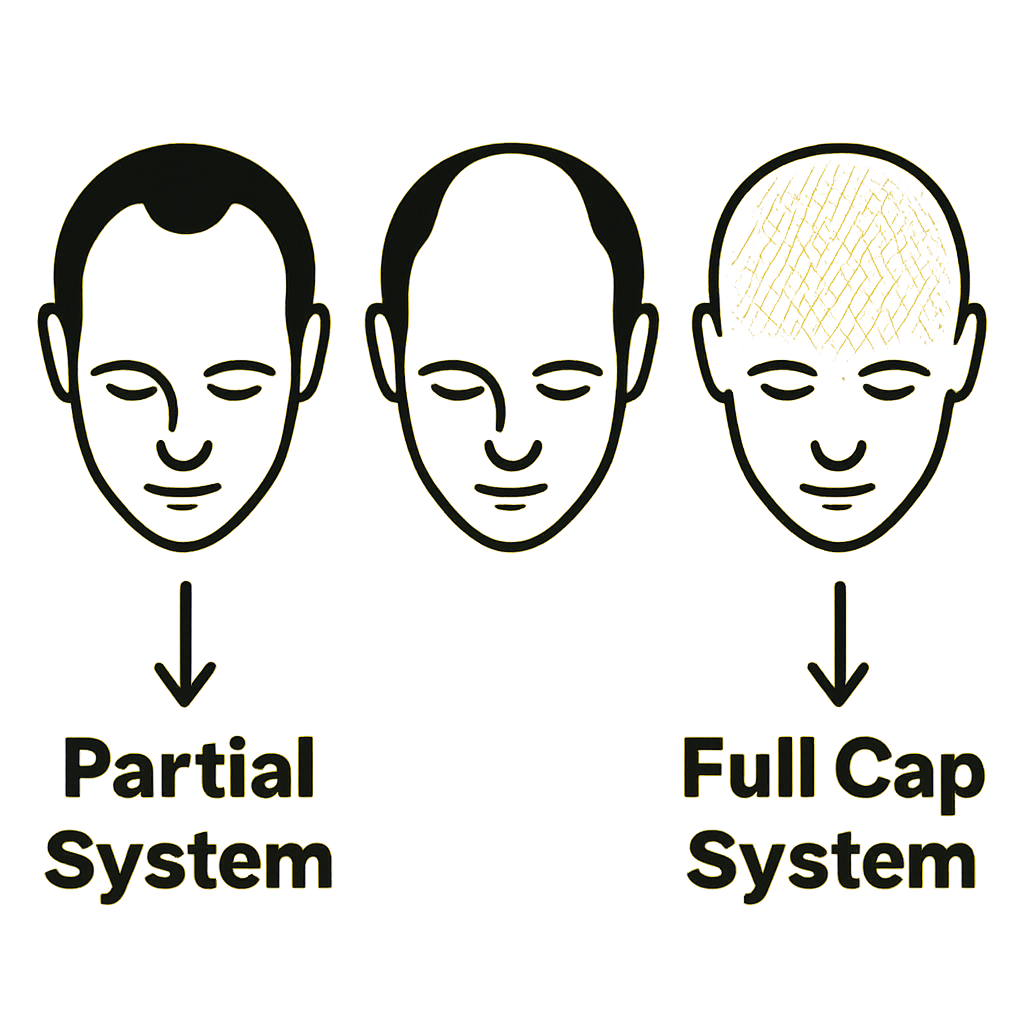
Understanding your specific pattern of hair loss is the key to choosing the right solution. By identifying that pattern, you can move past the confusion and see a clear path forward. The choice between a full cap and a partial system isn’t about preference; it’s about applying the right tool for the job.
For many men, hair loss starts at the temples or the crown. If you’re dealing with a distinct V-shape moving backward, a hair system for a receding hairline is the perfect answer. Likewise, if your main concern is a growing bald spot on the back of your head, a custom hair system for a thinning crown can be designed to fit that area precisely. In both cases, a partial hair system is the ideal choice because it targets the problem directly while blending into the healthy hair you still have. These are often considered the best hair systems for bald spots because of their focused approach. Among all available hair replacement options, targeted partial systems remain one of the most practical solutions.
The situation changes if your thinning isn’t confined to one area. You might notice that hair across the entire top of your scalp is becoming finer and less dense. In this scenario, trying to blend a partial system becomes difficult because there isn’t enough healthy, dense hair to blend with. This is where a full cap hair system becomes the clear and logical solution, providing complete and even coverage for a consistently full look.
Pros and Cons: Full Cap vs. Partial System
The choice between a Partial Hair System and a Full Cap Hair System involves more than just coverage, it’s about maintenance, blending, and your personal comfort level. Here’s a straightforward breakdown of what to expect from each.
- Partial Hair System
- Pros: Minimal Impact, Maximum Blend. A partial system only covers the area of hair loss, leaving your healthy hair untouched. This makes the scalp preparation and application process quicker, as you only need to focus on one specific zone. When done correctly, the blend between the system and your own hair is undetectable.
- Cons: The Blend is Everything. The success of a partial system hinges on a perfect match with your existing hair’s color, density, and texture. Your own hair will also continue to grow around the system, requiring regular trims to maintain that seamless blend.
- Full Cap Hair System
- Pros: Total Consistency. With a full cap hair system, you get 100% uniform color, length, and density across your entire scalp. There’s no need to worry about blending or matching, which gives you complete creative control over your look and makes styling simple and predictable.
- Cons: A Bigger Commitment. This option requires you to shave the entire area under the cap. For many, this is a significant mental step. It also means a larger area for scalp preparation and bonding during your maintenance routine.
Ultimately, are you looking for a targeted solution that works with your existing hair, or would you prefer a completely fresh start with a new, uniform look? There is no wrong answer, only the one that gives you the most confidence.
Comparing the Costs: What to Expect
When considering a significant change, the financial side is a natural concern. Generally, the upfront cost of a partial hair piece is lower than that of a full cap. This is simply because a partial hair system uses less material and is crafted for a smaller area of the scalp.
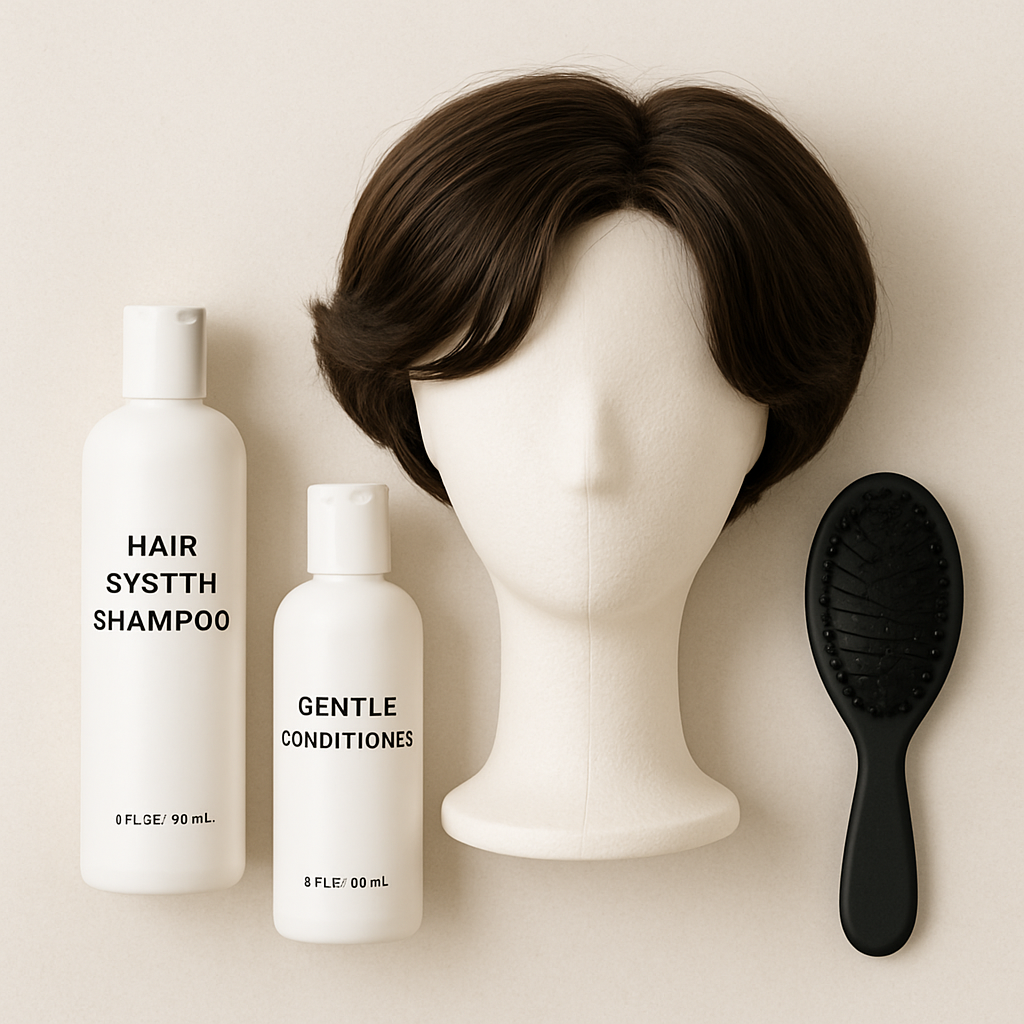
However, the initial price is only one part of the equation. Both options require a budget for ongoing Professional Hair System Maintenance Services to keep them looking pristine. This includes salon visits for re-application, professional styling, and specialized products like gentle shampoos and conditioners. This regular upkeep is essential for ensuring your hair system remains secure, comfortable, and undetectable.
Viewing this as an investment in your confidence, rather than just a purchase, can be helpful. When evaluating different hair replacement options, understanding both upfront costs and long-term maintenance is essential. Research from the National Institutes of Health highlights that long-term hair restoration solutions vary widely in maintenance requirements, which is why understanding ongoing care is just as important as the initial investment. Whether you choose a partial hair system or a full cap hair system, you are investing in the daily confidence that comes from looking in the mirror and loving what you see. The goal isn’t just to find the cheapest option, but to find the solution that provides the most value to your life.
A Personal Checklist: Full Cap or Partial System?
To determine which solution is right for your unique situation, it helps to reflect on your specific needs and goals. Consider these key questions there are no right or wrong answers, only what’s true for you.
- Where is my hair loss concentrated? Is it in specific spots, like a classic hair system for a receding hairline would cover, or is it thinning all over the top of your head?
- How important is blending? Do you want to keep your healthy, growing hair on the sides and back and have the system blend with it? A partial hair system excels at this.
- What’s my primary goal? Are you looking for a targeted fix for a problem area, or would you prefer the complete, uniform look provided by a full cap hair system?
Your answers will likely make one path feel more natural. If you’re leaning toward a targeted solution that works with your existing hair, a partial system is probably the way to go. If you desire total coverage and a brand-new, consistent look, a full cap is likely the better fit. While this checklist is a great starting point, the next step is getting an expert opinion to confirm your choice.
The Next Step: Get a Professional Opinion
Now that you can confidently tell the difference between a full cap hair system and a partial hair system, the next step is to create a personalized plan. To discover what is the most natural looking hair system for your face, hair type, and lifestyle, a one-on-one conversation is key.
The right hair replacement specialists in Orange County can answer your personal questions, like “Can You Swim with a Hair System?“, and let you see and touch the options for yourself. Viewing hair loss not as an endpoint but as a starting point for a new chapter is a powerful shift.
Scheduling a private consultation isn’t a high-pressure decision; it’s a simple, confidential conversation about your goals. You’ve already taken the crucial step of becoming informed. Now, you’re ready to take control and explore the path back to feeling like yourself again.