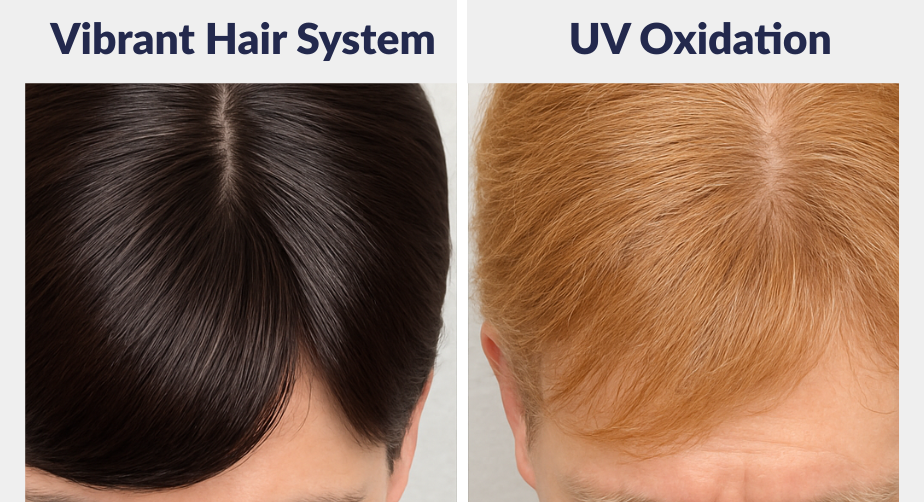
Imagine this: you come back from a weekend hiking trip, thinking you look fresh and energized. But when you look in the mirror, you see a rusty, brassy orange tint on your dark brown hair. For active wearers, this sudden color change can be very concerning. It usually happens because of hair system fading after too much sun exposure. What you’re noticing is UV oxidation, which is when sunlight breaks down the color pigments in your hair. While natural hair constantly replenishes itself with protective oils from the scalp, a hair system lacks this internal supply line. That’s why learning how to protect hair system from sun becomes essential, especially during outdoor activities, and why proper sun protection for hair should never be ignored.
Defense starts with a process called cuticle sealing. Imagine the hair cuticle as the shingles on a roof. When these shingles are smooth and flat, they protect against the weather. But when they are lifted due to heat or dryness, damage can get inside. Sealing involves applying special products to smooth this outer layer. This creates a barrier that keeps moisture in and boosts sun protection for hair.
Fortunately, sun damage is preventable. By layering physical protection with the right maintenance habits, you can maintain a flawless, look while still enjoying your run, swim, or hike in the summer heat. Whether you’re protecting hair in the sun during a beach day or simply trying to protect hair from sun exposure in daily life, small steps can make a big difference in preserving color and quality.
The Physics of Sun Damage: Why Systems Are More Vulnerable
Your natural hair comes with a built-in defense mechanism: sebum. This natural oil constantly coats the hair shaft to keep it hydrated and protected. Hair systems, however, are disconnected from this biological supply line. Once cut from the donor, the hair cannot self-repair or replenish moisture. Without continuous oil delivery, the strands are left exposed to the elements, making UV protection for synthetic and human hair systems a structural necessity rather than just a cosmetic preference.
Sunshine attacks your setup on two distinct fronts. First, infrared heat softens the adhesive bond—think of butter left on a warm counter—which can cause sliding during activity. Second, ultraviolet radiation blasts open the hair cuticle. In natural hair, oils would smooth these microscopic shingles back down, but on a system, they stay open. This increases porosity, causing the hair to absorb and lose moisture rapidly. The result is “hair system fading,” where rich color oxidizes significantly faster than growing hair.
High porosity creates a compounding problem: the hair becomes a trap for environmental debris. When you sweat or swim, that open cuticle traps salt and chlorine deep inside the fiber, creating a texture that feels like straw. Since the hair can’t push these contaminants out naturally, preventing this damage starts with how the unit breathes.
Choosing the Right Base for High-Heat Adventures To Protect Hair System
When you work out at the gym or run on trails, managing heat is important for your scalp. A lace base acts like the moisture-wicking fabric in good running shirts. It has many small holes that let air reach your skin and let sweat turn into vapor before it drips down. This airflow makes breathable lace bases a great choice for people who get too hot. They help avoid that uncomfortable “helmet head” feeling during tough workouts.
Polyurethane (often called “skin”) bases, conversely, function more like a swimming cap. While they offer an incredibly realistic appearance by mimicking the scalp’s texture, they act as an impermeable barrier. For those who wear a hair replacement system, sweat can cause problems. When you sweat, the moisture gets trapped between your scalp and the adhesive. This is called “pooling.” If you wear a system made of skin, it’s important to manage this sweat. You will need to check and maintain it more often because the moisture can break down the bond sooner than usual.
Quick Comparison: The Active Wearer’s Trade-Off
- Lace (Swiss or French): Maximum airflow and cooling; sweat passes through the mesh. Drawback: Cleaning is harder because adhesive can seep into the lace fibers.
- Poly Skin (0.03mm–0.08mm): Easiest cleanup (wipe and go) and invisible hairline. Drawback: Traps heat and sweat, leading to potential bond slippage during heavy exertion.
Choosing the best hair system base for heavy sweating ultimately relies on knowing your personal “sweat threshold.” If you prioritize ventilation over ease of cleaning, lace is your safety net; if you need the most realistic front hairline and only exercise moderately, skin remains a viable option. For real-world insights before deciding, you can explore our guide on Hair System reviews.
Chemical Shields: UV-Filtering Sprays and Leave-in Sealants

Just as you wouldn’t leave high-performance gear baking on a dashboard, you shouldn’t leave your system exposed to direct sunlight without armor. Unlike natural growing hair, a hair system receives no nutrient supply from the scalp to repair damage. When UV rays hit unshielded fibers, they strip away moisture and oxidize the color. To fight this, you need specialized sun protection for hair, formulas designed to shield strands from UV damage, similar to how hair sunscreen products are used to protect both hair and scalp from sun exposure.
Standard skin sunscreens are often too heavy and greasy for this purpose, potentially turning a lightweight system into a weighted, oily mess. Instead, active wearers should utilize leave-in conditioners containing “micronized UV barriers.” These specialized sprays coat individual strands without clogging the delicate knots in your base. Adopting a simple morning ritual is all it takes to protect hair from sun damage: a quick, 30-second misting before your morning run creates a shield that keeps fibers soft, preventing the brittle texture that signals a neglected system.
Checklist: Selecting UV Protection for Synthetic and Human Hair Systems
- Look For: Benzophenone-4 or Octyl Methoxycinnamate (chemical filters that absorb UV rays).
- Look For: Hydrolyzed Silk or Keratin (proteins that reinforce the fiber structure).
- Avoid: High Alcohol content (SD Alcohol 40), which accelerates drying and brittleness.
- Avoid: Heavy mineral oils, which can seep down and loosen the adhesive bond.
The ‘Gasket’ Principle: Securing the Bond Against Intense Sweat and Heat
High-intensity training can make you sweat a lot. If you don’t use the right adhesive, this heat can ruin your bond. Think of your adhesive like a rubber seal on a waterproof watch; it needs to keep moisture out while handling your body heat. For triathletes or daily swimmers, waterproof hair system adhesives for swimming usually use acrylic-based formulas. These give a strong, long-lasting hold and resist water much better than softer water-based adhesives.
It’s also important to know the difference between tape and liquid adhesive for sports. Tape is thicker and can bend with your scalp when lifting heavy weights. Liquid adhesives are hard to notice but need a completely dry surface to stick well.
Even the strongest “gasket” will fail if the surface underneath is compromised by your body’s natural chemistry. Sweat contains oils and salts that act like microscopic chisels, slowly chipping away at the adhesive’s grip from the inside out. To counter this, you need a scalp protector for athletes with sensitive skin. A specialized barrier fluid applied before the glue. This clear layer acts like a primer on a painted wall, effectively sealing your natural oils into the skin so the adhesive bonds to the stable protector rather than fighting a losing battle against your sweating pores.
Staying secure is ultimately about recognizing the early warning signs of “adhesive breakdown” before a shift occurs publicly. If the system feels like it is sliding slightly when you press on it, or if the hairline feels gummy rather than tacky to the touch, the bond has degraded and requires immediate attention. Catching these signals early allows you to re-bond confidently.
Post-Adventure Recovery: Removing Salt, Chlorine, and Sweat
Your workout isn’t finished until the cooldown includes your hair. The sweat drying on your scalp leaves behind salt, which crystallizes as the moisture evaporates. If left unchecked, these microscopic sharp edges act like sandpaper, grinding against the hair fibers and slowly eating away at the adhesive bond. For swimmers, the threat is doubled: chlorine and ocean brine strip moisture rapidly, turning soft, realistic hair into brittle straw.
Deep cleaning with shampoo every single day is actually counterproductive, as it creates dry, unmanageable hair. Instead, a daily maintenance routine for active hair system users should rely on the “Rinse-Only” technique. Use cool, fresh water to flush out sweat and chemicals immediately after activity. This resets the hair without stripping the oils that keep the system looking natural. Think of it like rinsing a wetsuit; you want to wash away the corrosive elements without wearing down the material through harsh scrubbing.
When you face heavy exposure to the elements, effective methods for removing salt water and chlorine from hairpieces become critical:
- Immediate Flush: Rinse thoroughly with fresh water within 20 minutes of exiting the pool to prevent chemical hardening.
- pH Neutralization: Apply a UV-protective leave-in conditioner to counteract chlorine drying and restore slip to the hair.
- Tension-Free Detangling: Use a wide-tooth comb starting from the tips, never the roots, to avoid pulling on the wet, softened bond.
Managing the skin underneath is just as vital for longevity. Good post-workout scalp hygiene for hair system wearers involves drying the area thoroughly; if you feel an itch or minor irritation after heavy sweating, an alcohol-based scalp tonic can help evaporate trapped moisture and kill bacteria without necessitating a full removal.
Practical Shielding: Helmets, Hats, and Friction Management

Cyclists and climbers often worry that tight gear will shift their unit, but the real enemy is actually microscopic abrasion. When you utilize a hair system for high-impact sports, you must consider how your safety gear interacts with the hair fibers. Constant rubbing from a helmet’s rough foam padding acts like a slow eraser on the delicate knots where hair is tied to the base, leading to premature bald spots on the system itself. This “friction shedding” shortens the lifespan of your piece significantly more than wind or rain ever could.
To combat this abrasive wear, the most effective upgrade to your kit is a simple silk or satin liner worn underneath your headgear. Unlike cotton or foam, which grip and tug at individual strands, silk allows the hair to glide effortlessly beneath the helmet during movement. This barrier serves a dual purpose by blocking direct rays that oxidize and fade hair color, a critical step to protect hair from sun damage. While choosing a hair system for extreme outdoor adventures often focuses on base durability, adding a breathable skull cap essentially creates a protective force field that preserves the hair’s density and color even during all-day excursions.
Physical barriers handle the external threats, but they inevitably trap more body heat against the scalp, accelerating the breakdown of the adhesive underneath. No matter how well you protect the hair fiber, the combination of rising temperatures and trapped perspiration fundamentally changes the chemistry of your bond. This intensified environment means the standard four-week hold time is no longer realistic.
The Summer Service Cycle: Why You Must Reinstall More Frequently
Standard timelines assume a sedentary lifestyle, but the impact of intense cardio on hair system bond chemistry changes the rules. Sweat acts as a generic solvent that slowly degrades the adhesive seal from the inside out. This makes a typical four-week hold into a ten-day cycle for heavy sweaters. Knowing when to reinstall your system during daily exercise prevents bond breakdown, visible lifting, and hygiene issues from trapped bacteria.
Manage this accelerated schedule by incorporating the “Touch Test” into your daily maintenance routine for active hair system users. Every morning, firmly press your fingertips against the front hairline for three seconds; a secure bond feels solid like your own skin, while a degrading bond feels tacky or shifts slightly under pressure. Detecting this looseness early allows you to perform a quick clean-up and re-bond immediately rather than facing an accidental lift during a workout. Mastering this proactive check is the final mental hurdle before executing your plan.
Sun-Damage FAQ for Active Hair System Wearers
Start with sun protection for hair (a UV-filtering leave-in), then add a hat or helmet liner. When protecting hair in the sun, reapply your UV mist if you’re outside for hours. This routine reduces the risk of hair system fading after repeated exposure.
Use sun protection for hair before you leave, rinse with fresh water after swimming, and wear a breathable cover when possible. If your priority is to protect hair from sun without buildup, choose a lightweight spray and avoid oily creams.
Yes. Heat and sweat lift the cuticle and make UV damage more aggressive, so sun protection for hair matters even more. When protecting hair in the sun, rinse sweat out as soon as you can and re-mist your UV leave-in. This lowers the odds of accelerated hair system fading.
UV leave-in (sun protection for hair), then physical cover during peak hours. If you’re trying to protect hair from sun on exposed trails, a cap plus a small reapply bottle is more reliable than a single morning application.
Daily UV leave-in (sun protection for hair) plus weekly deep conditioning is the baseline. To protect hair from sun, limit direct exposure during the strongest UV window and use shade whenever practical.
Dryness, tangling, and warm/brassy tone shifts are common signs, often appearing before obvious shedding. Increase sun protection for hair, add physical cover, and rinse after heavy sweat sessions.
Your Summer Readiness Action Plan
Transitioning from viewing your hair as a fragile liability to treating it as high-performance athletic gear changes everything. You no longer need to sit on the sidelines; you simply need the right setup. By understanding how to seal your base against sweat and shield fibers from UV rays, you have unlocked the freedom to engage in Hair Systems for Active Lifestyles without the constant fear of a malfunction.
Preparation is the difference between a confident hike and an anxious one. Before your next outing, assemble a portable ‘Ultimate Adventure Bag’ to handle any environmental variable:
- UV Protection Spray: Essential to protect hair from sun damage and prevent color fading.
- Wide-Tooth Comb: For safely detangling windblown hair without stressing the base.
- Adhesive Touch-Up Pen: For a quick 30-second fix if the hairline lifts.
- pH-Balancing Rinse: To neutralize sweat salts immediately post-workout.
Stop checking the mirror every five minutes and start trusting your bond. With your maintenance routine optimized for high exertion and your emergency kit in your pack, your focus can shift back to where it belongs: the finish line, the summit, or the waves. The gear is ready; now it is time to get out there and enjoy the heat.