
Think about peeling a stubborn price tag off a new drinking glass. If you try to scrape it off dry, you’re left with a sticky mess that refuses to disappear. Removing your hairpiece without a proper Hair System Glue Remover creates the same frustrating situation.
Instead of scrubbing or forcing the system off, the secret is switching from a mechanical struggle to a chemical solution.
Pulling a hairpiece that’s bonded with strong glue for toupee can damage both the system and your scalp. Dermatologists explain that pulling adhesive from dry skin can cause microscopic tears in the scalp barrier, which often leads to redness and irritation. A quality Hair System Glue Remover breaks down the adhesive bond so the system can slide off gently rather than being ripped away.
Many new wearers struggle with how to take out hair glue safely. In reality, the key is patience and choosing the right solvent. Whether you’re dealing with strong toupee hair glue or lightweight adhesives, using the right remover ensures a clean surface for your next installation.
Learning the basics of glue removal from hair system bases protects your investment and keeps your scalp healthy for long-term wear.
Oil vs Alcohol: Choosing the Right Solvent for Your Scalp and System
Not all removers work the same way. The best solvent depends on your scalp type and the base material of your system.
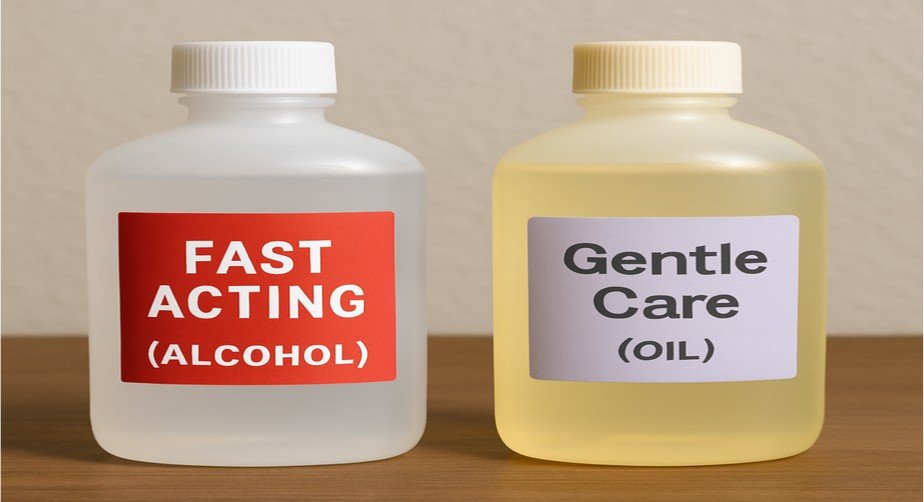
Alcohol-based removers act quickly and evaporate fast. Many professionals prefer them when removing glue for toupee units with lace bases because they disappear cleanly without leaving residue. A fast-evaporating Hair System Glue Remover can break down toupee hair glue quickly while preventing buildup inside the lace mesh.
Oil-based removers work differently. Instead of dissolving the adhesive instantly, they lubricate the bond and help the system slide off smoothly. This approach is ideal when learning how to take out hair glue from delicate or sensitive areas.
When performing glue removal from hair system bases made of polyurethane (poly), oil-based removers are especially useful because they keep the thin skin material from drying or cracking.
Quick Comparison
| Alcohol-Based Removers | Oil-Based Removers |
|---|---|
| Fast acting | Gentle and moisturizing |
| Evaporate quickly | Excellent for poly bases |
| Ideal for lace systems | Reduce tension on delicate materials |
| Can irritate dry scalps | Require shampoo afterward to remove residue |
Avoid mixing these two solvents during the same cleaning session. Combining them can turn toupee hair glue into a sticky sludge that is difficult to remove.
The Lace Release Method for Delicate Hair Systems

Lace systems require a special removal technique because the base is extremely delicate.
Professional stylists often rely on a spray-through method using a fast acting Hair System Glue Remover. Since lace contains thousands of tiny holes, the solvent can pass through the mesh and attack the adhesive from above. This helps loosen glue for toupee systems without pulling the base.
Patience is critical here. Rushing the process while performing glue removal from hair system lace bases can stretch the mesh and ruin the natural fit.
Once the remover penetrates the bond, the toupee hair glue will soften and release naturally. If the system still feels tight, apply more remover instead of forcing it off.
Understanding how to take out hair glue properly protects both the hair fibers and the lace structure.
Cleaning Poly Bases: Removing Stubborn Residue Without Damage

Unlike lace bases, polyurethane systems have a solid surface. Because of this, solvents must be applied directly to the underside where the glue for toupee is attached.
When removing residue, many people make the mistake of scrubbing aggressively. However, the best method for glue removal from hair system poly bases is rolling the adhesive away from the surface.
Follow this process:
- Apply a citrus-based Hair System Glue Remover onto the adhesive area.
- Wait a few minutes so the toupee hair glue begins to soften.
- Gently roll the adhesive away with a cotton pad or cloth.
- Repeat until the majority of the glue lifts away.
This method is much safer than scrubbing and helps prevent damage to thin skin bases.
Why Patience Matters During Glue Removal
Many wearers struggle with how to take out hair glue because they rush the process. Adhesive removers need time to break down the bond.
Professionals call this waiting period “dwell time.” During this stage, the Hair System Glue Remover saturates the adhesive and turns solid toupee hair glue into a soft gel.
To protect your scalp during glue removal from hair system applications:
- Apply remover evenly
- Wait 3–5 minutes
- Test a small corner before lifting the unit
If resistance remains, apply more remover instead of pulling. This approach prevents irritation and makes removing strong glue for toupee systems much easier.
Deep Cleaning Your Hair System Base
Once the unit is removed, small adhesive patches often remain on the base. Even after basic cleaning, thin layers of toupee hair glue can cling to lace or poly materials.
Stylists sometimes use a technique called the “mirror slide.” A smooth glass surface sprayed with Hair System Glue Remover allows the base to glide across it, pulling residue away safely.
For deeper cleaning, perform a shallow soak.
Shallow Soak Method
You will need:
- A shallow dish
- Citrus-based solvent
- Gentle dish soap
Steps:
- Pour a small amount of solvent into the dish.
- Place the base of the system into the liquid while keeping the hair dry.
- Allow the solvent to soften remaining glue for toupee residue for 10-15 minutes.
- Wipe away the loosened adhesive carefully.
This process makes glue removal from hair system bases much easier without risking hair shedding.
Sensitive Scalp Solutions: Gentle Removers for Comfortable Wear
Some people experience irritation from strong alcohol removers. In these cases, a citrus-based Hair System Glue Remover can be a safer alternative.
These formulas work by slowly loosening toupee hair glue instead of aggressively dissolving it. While the process may take a few extra minutes, it greatly reduces scalp irritation.
Even after successful glue removal from hair system attachments, an oily film may remain on the skin. This residue can prevent new glue for toupee applications from bonding properly.
To restore the scalp:
- Wash the scalp with a gentle cleanser
- Remove remaining oils from the remover
- Allow the skin to dry completely before applying adhesive
Treating your scalp with this level of care prevents the chronic irritation that forces many men to take long breaks from wearing their systems.
Medical resources discussing causes of hair loss often emphasize how scalp health and irritation can influence long-term hair growth and comfort.
A calm, well-maintained scalp provides the best foundation for a secure bond and helps prevent irritation during regular maintenance routines.
Mastering Your Maintenance: A Simple Removal Checklist
Maintaining your hair system doesn’t have to be stressful. Once you understand how a Hair System Glue Remover works, removing adhesive becomes a controlled and safe process.
Follow this workflow:
- Apply remover to soften the toupee hair glue.
- Wait several minutes for the adhesive to break down.
- Gently lift the system and slide it off.
- Perform glue removal from hair system base materials.
- Clean the scalp to remove any remaining glue for toupee residue.
Most importantly, remember that patience matters when learning how to take out hair glue. Let the remover do the work instead of pulling or scrubbing.
If you want expert assistance with maintenance or installation, you can always book an appointment with our specialists for professional help and personalized care.
Proper hair system maintenance protects both your scalp and your investment, ensuring every reinstall feels comfortable and looks completely natural.