
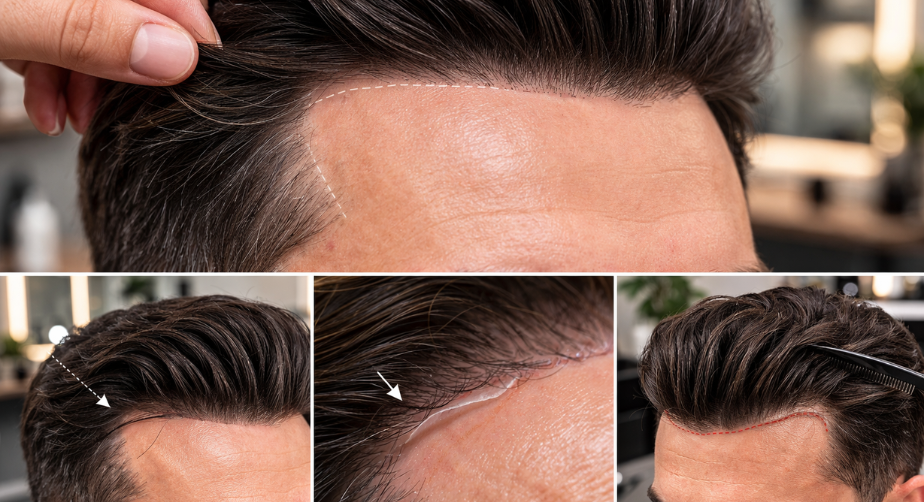
Your hair system looked perfect this morning. Then the edge lifted. Now you feel exposed. If you’re worried people can tell, you’re not alone. This happens even with high-quality systems, and it can feel stressful fast. The right hair system repair can secure it again without ruining the look. If the base is damaged, careful toupee repair can stop a small issue from turning into a bigger one. A clean, professional hair system service also helps the bond last longer and feel more comfortable. Many clients who wear non-surgical hair replacement systems simply need the right timing and proper techniques. With consistent care, you can prevent most hair system problems and keep your results looking natural. You don’t have to guess or panic. There are clear solutions, and you can get back to feeling like yourself. If you want step-by-step advice, check out our complete Hair System Maintenance: Tips for Long-Lasting Results
Why Hair Systems Start Lifting
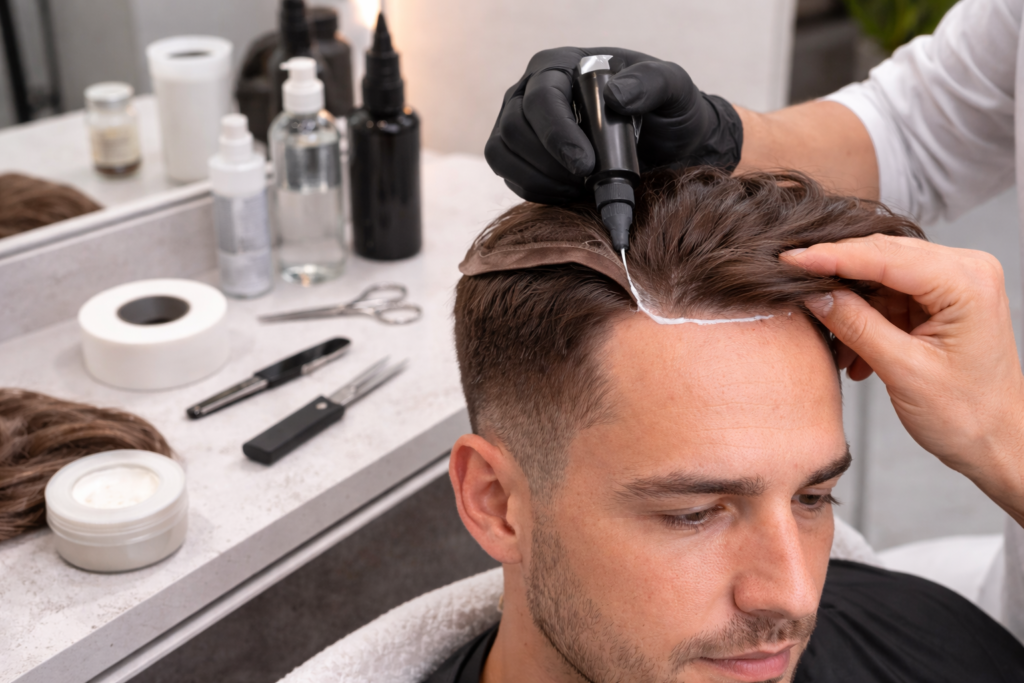
Lifting usually starts at the hairline, temple points, or the perimeter. It happens when the bond weakens and the base starts separating from your skin.
Common reasons:
- Oil and sweat buildup: Skin oils break down tape and adhesive over time. If you work out often, you may need more frequent hair system maintenance.
- Wrong adhesive for your lifestyle: Some tapes are better for oily skin; some liquid adhesives hold better in humid conditions.
- Improper prep: If the scalp isn’t fully clean and dry, the bond won’t last. Many hair system service appointments start with scalp prep for this reason.
- Stretching the base during attachment: Pulling too hard can cause uneven tension, leading to early lifting and future hair system repair needs.
- Product residue near the bond: Styling sprays and leave-ins can creep into the edge and weaken adhesion.
If you’re wearing non-surgical hair replacement systems, lifting isn’t a sign you “did something wrong.” It’s usually just timing, body chemistry, and products. Quick touch-ups are normal, and minor lifting is often the first moment to think about toupee repair (before it becomes a tear).
How to Fix Hair System Tears
Tears usually happen when the base is stressed often during removal, cleaning, or reattachment. Lace can snag, and thin-skin/poly bases can split if pulled.
Start with one rule: don’t keep wearing a torn system without addressing it. A small rip spreads fast, and hair system repair is easier when damage is small.
Simple, safe approach for minor damage:
- Stop the tear from spreading. Don’t tug on the area. Avoid brushing aggressively near it.
- Clean carefully. Remove adhesive residue gently. Rubbing hard can enlarge the tear and make toupee repair harder.
- Use a repair patch (base-appropriate).
- For lace: small lace patches and a compatible adhesive can reinforce the area.
- For poly/thin skin: a poly patch or bonding strip can stabilize splits.
- Reinforce before rebonding. If you rebond without reinforcement, the bond tension may reopen the tear.
When to avoid DIY:
- If the tear is at the hairline (visibility risk).
- If the tear is large or branching.
- If the base is thinning overall.
In those cases, a professional hair system service is usually the best call. Many salons that specialize in non-surgical hair replacement can handle precision patching that looks cleaner and lasts longer. This is where true toupee repair skill matters especially for lace systems where realism is the whole point.
To reduce future tears, treat removal as part of hair system maintenance: take your time, use proper solvent, and let adhesive release instead of forcing it.
Professional Rebonding Process
Rebonding is the reset that restores security, comfort, and a clean hairline. Done correctly, it also reduces lifting and helps prevent future hair system repair issues.
A typical professional rebond includes:
- Consult + base check: They look for weak spots, early tears, and edge wear (often where toupee repair might be needed).
- Safe removal: Solvent is used to reduce stress on the base it is critical for long-term hair system maintenance.
- Adhesive cleanup: Old tape/adhesive is removed from both scalp and base so the new bond is even.
- Scalp prep: Cleansing, degreasing, and sometimes a scalp protector for better hold.
- Bond selection: The stylist chooses tape/adhesive based on your skin, activity level, and system type.
- Placement + alignment: Proper positioning prevents tension points that cause lifting and future hair system repair.
- Press + cure time: The bond is set and allowed to cure so it lasts longer.
- Cut-in and blend (if needed): Especially important for non-surgical hair replacement orange county clients who want a natural transition into bio hair.
A strong rebond is more than “sticking it down.” It’s a full hair system service that protects the base, improves comfort, and makes daily styling easier. It also reduces how often you’ll need emergency toupee repair. Proper ventilation and correct solvent handling are important whenever working with bonding agents, as outlined in general cosmetic safety guidance from the U.S. Food and Drug Administration.
When You Should Visit a Salon
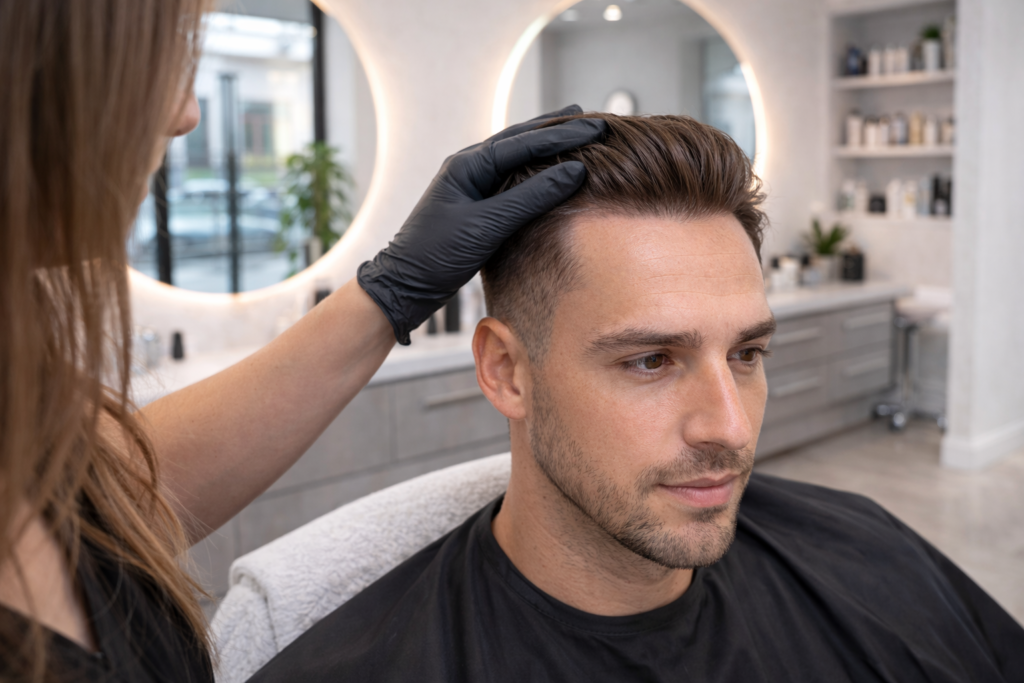
Some problems are fine at home, but others are best handled by a specialist. A good rule: if the issue affects the hairline, comfort, or base integrity, book a visit. If you’re unsure whether your system needs repair or a full rebond, you can book a professional consultation here to get personalized guidance.
Visit a salon if:
- Lifting returns within 24 – 48 hours after you fix it.
- You feel itching, burning, or redness under the bond.
- The hairline is uneven or visibly shifting.
- You see thinning, fraying lace, or repeated small tears.
- You’re unsure which adhesive is safe for your base type.
- Your “quick fix” attempts are turning into repeated hair system repair cycles.
A salon-level hair system service helps because they can:
- Match the right adhesive system to your skin and routine.
- Spot early damage and reinforce it before it becomes major toupee repair.
- Improve placement so your system lays flat and looks natural.
- Teach a simple hair system maintenance routine that fits your schedule.
If you’re using non-surgical hair replacement orange county options for confidence and convenience, salon support is part of what keeps it feeling convenient. The goal isn’t constant appointments it’s fewer emergencies and longer-lasting wear.
Hair System Repair in Orange County
If you’re dealing with lifting edges, a small rip, or a bond that won’t hold, professional help can save your system. The right local specialist can combine hair system repair, clean rebonding, and realistic blending so your system looks secure not just “fixed.”
What to look for in Orange County:
- Proven experience with your base type (lace, poly, hybrid).
- Clean, step-by-step rebonding (not rushed).
- Willingness to explain aftercare in plain language.
- A consistent hair system service schedule that matches your lifestyle.
- Clear options for reinforcement and toupee repair when needed.
A practical care plan often includes:
- Regular appointments for rebonding and deep cleaning (hair system service).
- Simple weekly habits like gentle removal, correct solvents, and adhesive-safe products (hair system maintenance).
- Fast attention to early damage, so small issues don’t turn into expensive hair system repair.
For many wearers, non-surgical hair replacement orange county is about looking natural without surgery or long downtime. But that only works when the system stays secure, comfortable, and undetectable. Staying ahead of lifting and tears with the right hair system maintenance and timely toupee repair is what keeps your results consistent.