When you hear the word ‘toupee,’ you might picture something unnatural and easily spotted. However, modern non-surgical hair replacement has evolved dramatically, offering seamless, realistic solutions that leave old stereotypes behind. One of the easiest options is clip-on hair systems. While they may sound similar to clip on extensions, they are designed specifically to provide targeted coverage for thinning areas rather than simply adding length or volume. They can help you change your look without using adhesives or making long-term commitments.
This guide provides a balanced overview of these systems, exploring how they work, their key benefits, and potential downsides.
What Is a Clip-On Hair System?
A clip-on hair system isn’t a full wig that covers your entire head. Instead, it’s a targeted solution for areas where hair is thinning, such as the crown or a receding hairline. Unlike clip on extensions, which are typically used to add length or fullness throughout the hair, its main purpose is to work with your existing hair not hide it completely to restore a fuller appearance.
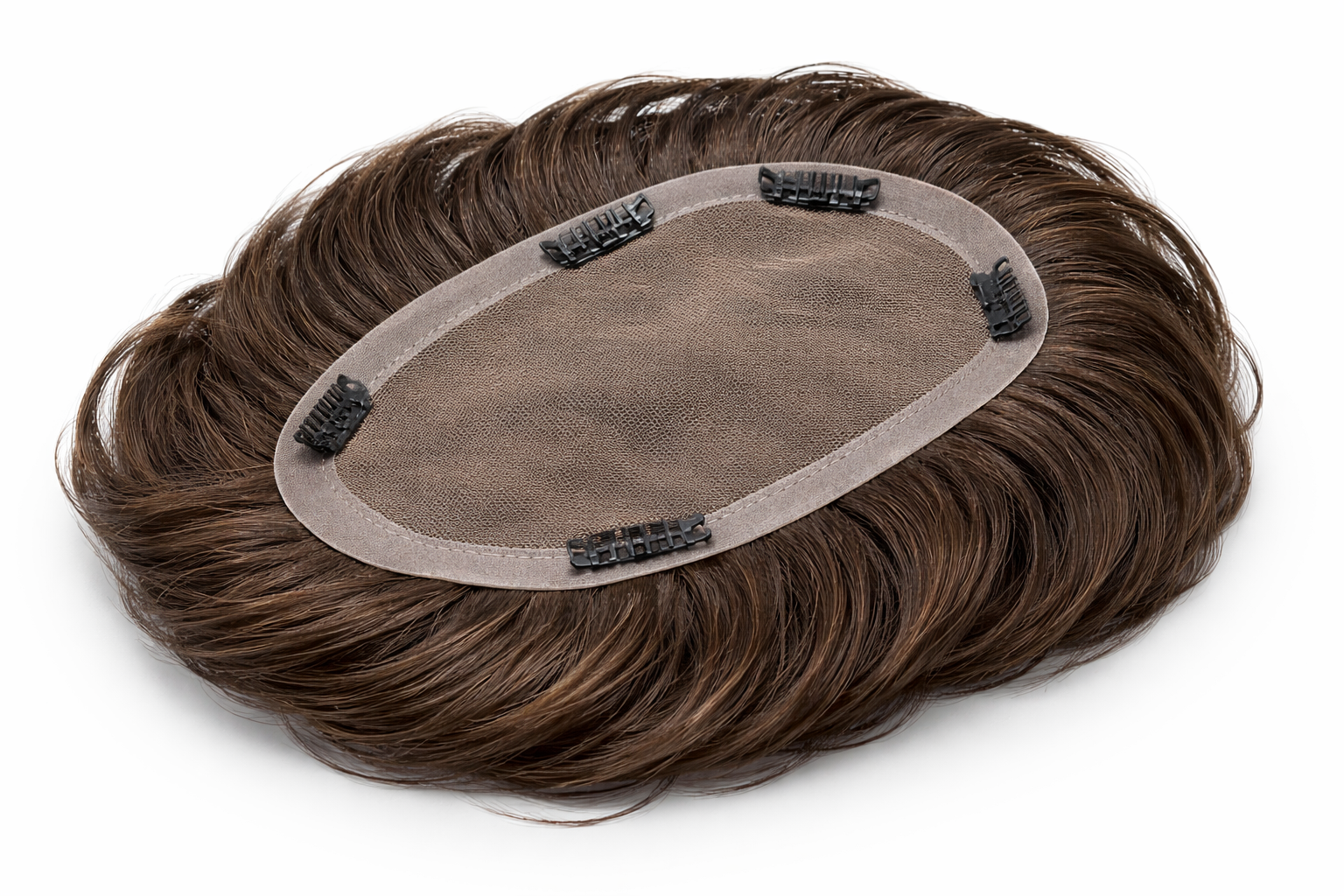
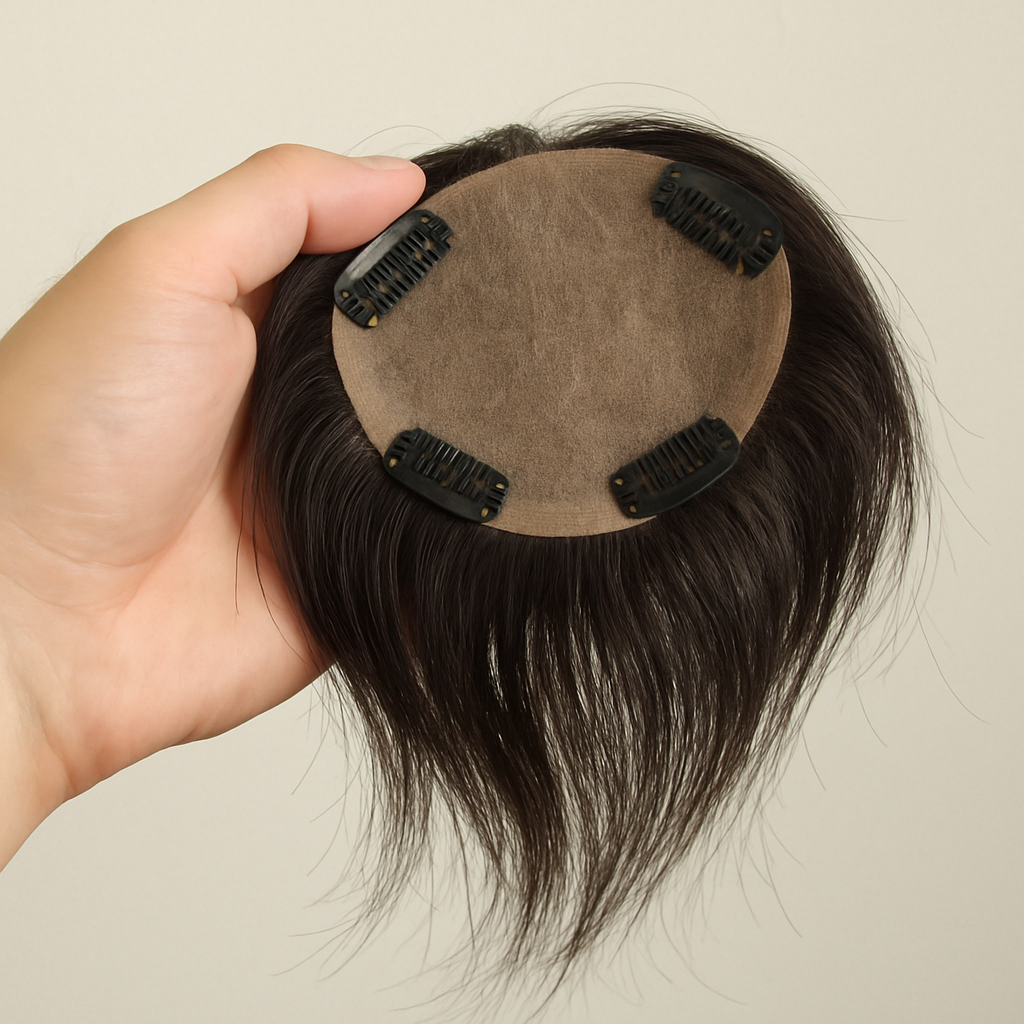
The core of the system is a thin, breathable base holding strands of hair, designed to cover just the area of loss. This allows the new hair to blend with your own, creating a natural-looking effect that adds density right where you need it most. The result is a discreet boost in volume that looks and feels like your own hair.
Because this method doesn’t rely on any adhesives, it’s often called a glueless hair system or a modern clip-on toupee. It offers a simple, non-permanent way to manage hair loss without the commitment or mess of tapes and glues.
How Do Clip-On Hair Systems Attach?
A glueless hair system stays secure thanks to several small clips sewn to the underside of the base. These clips are similar to small, strong hair barrettes. Just press the clip to close it and press again to open it.
To attach the system, you position it over the area of hair loss, slide the open clips into your own hair, and then snap each one closed. Each clip gets a firm but gentle grip, creating a network of anchor points that hold the piece securely in place throughout the day.
This means the entire attachment process is completely clean, with no messy adhesives, sticky residues, or chemicals. This straightforward and scalp-friendly approach is one of the biggest advantages of a modern clip-on toupee, offering security without the fuss.
The 3 Key Benefits of a Clip-On Hair System
This clean, glueless approach brings major benefits, making clip-on systems an appealing choice for newcomers to non-surgical hair replacement. The core of its appeal is total control. Because you can attach and remove the system yourself in minutes, your daily routine is entirely up to you. This flexibility also directly promotes better scalp health, as your skin can breathe freely every night.
For many, the most significant benefits are:
- Ultimate Flexibility & Control: You decide when to wear your hair system. Put it on for work or a night out, and take it off to sleep, shower, or relax at home. There’s no long-term commitment.
- Better Scalp Health: With no adhesives blocking your pores, your scalp stays cleaner and healthier. You can easily wash and care for your own hair and scalp without anything in the way.
- Ease of Use & Cost Savings: You don’t need expensive salon appointments for application, removal, or cleanup. This self-sufficiency saves you both time and money.
While these advantages make a no-glue hair system a fantastic choice for many, it’s important to have the full picture and consider its trade-offs.
The Downsides of Clip-On Toupees
While the benefits are compelling, it’s crucial to understand the disadvantages. The biggest consideration is that they require a certain amount of existing hair to work. The clips need a sturdy patch of hair to grip onto, so if your hair is very thin where the clips would sit, the system may not feel secure.
Another point is the daily routine. The same flexibility that makes a glueless hair system appealing is allowing you to remove it every night that also means you have to put it on every morning. For many, this becomes a quick part of their grooming habit, but for others, the daily application can feel repetitive. Honest clip-on hair system reviews often mention this daily commitment as the primary trade-off for avoiding adhesives.
So, can clip-on systems damage hair? This is a valid concern, but the risk lies in improper usage. If clips are attached too tightly or worn in the exact same spots for months, they can put continuous strain on the hair follicles. Over time, this could lead to localized thinning known as traction alopecia, a condition caused by prolonged tension on the hair follicles.
Fortunately, this risk is almost entirely preventable. By ensuring the clips are snug but not painfully tight and occasionally shifting their placement by a few millimeters, you give your hair follicles a break and avoid any strain.
Clip-On vs. Glue-On Systems: Choosing Your Best Fit
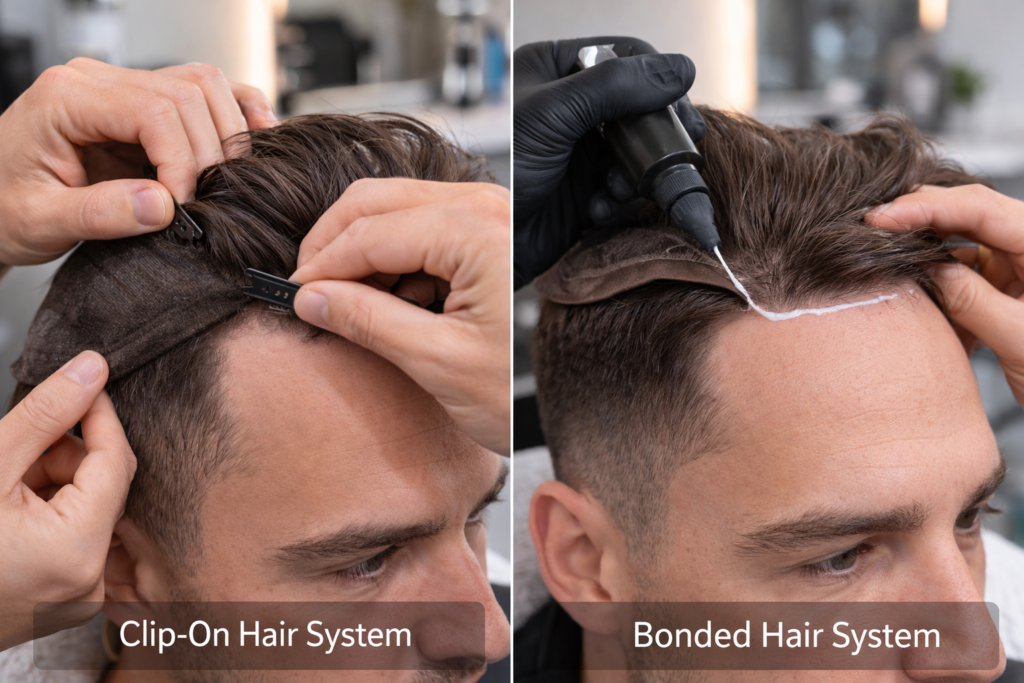
The main alternative to clips is a system attached with adhesives. These “glue-on” or “bonded” systems are secured to the scalp using a skin-safe glue or double-sided tape. This creates a semi-permanent bond that allows you to wear the hair system continuously, 24/7, for several weeks at a time.
This highlights the fundamental difference: commitment and lifestyle. If you’re unsure which option fits your needs, exploring our Professional Hair Replacement Services can help you compare all available solutions. A no-glue hair system offers ultimate flexibility. You are in complete control, deciding each day when to wear it and when to take it off, allowing your scalp to breathe freely at night. It’s a daily-wear solution that requires no long-term bonding.
In contrast, adhesive systems are designed for convenience. Once applied, you can sleep, shower, and exercise without removing them. While this convenience is nice, it does come with a downside. Bonded systems need regular professional care. This usually happens every 3 to 5 weeks.
For men who have previously tried clip on extensions for added volume, the difference can be helpful to understand. Extensions enhance existing hair, while a clip-on system provides more complete top coverage without glue.
Is a Clip-On System the Right Solution for Your Hair Loss?
The most important factor in choosing a clip-on system is the state of your existing hair. Because the clips need something to grip similar to how clip on extensions attach to natural hair this solution works beautifully for individuals with diffuse thinning or a pattern of hair loss like a best hair system for thinning crown or clip-on hair pieces for receding hairline.
Personal preferences also play a huge role. If the idea of adhesives or a semi-permanent commitment feels like too much, a clip-on is a perfect fit. It’s a completely reversible, temporary hair loss solution that puts you in full control. You decide when to wear it and when to give your scalp a rest. This is also a significant advantage for anyone with sensitive skin or allergies, as it completely avoids tapes or glues.
For these reasons, clip-on systems are often the best starting point for anyone new to hair replacement. They offer a low-risk, high-reward way to experience the confidence of a full head of hair without the maintenance of a bonded system.
How Secure Is a Clip-On Toupee?
The biggest hesitation for anyone considering a clip-on is the fear of it shifting or falling off. Modern systems are designed specifically to prevent this. The small, pressure-sensitive clips used today are a world away from old-fashioned toupees. While they may look similar in concept to the clips used in clip on extensions, they are typically stronger and provide coverage without pulling or causing damage.
A large part of that security comes from a simple step you can perform at home: The “Tug Test.” Once your system is clipped in, gently tug on the hair in a few different spots. You shouldn’t feel any major shifting or looseness. This quick confidence check answers the question of How Secure is a Clip-on Toupee before you walk out the door. Many positive clip-on hair system reviews from long-time wearers mention this habit as key to their daily peace of mind.
It’s also important to be realistic. While a clip-on toupee for men is perfect for nearly all daily activities, it’s not designed for high-impact sports, swimming, or riding a roller coaster. For everyday life, its security is more than enough. For those extreme situations, a bonded system might be a better choice.
Your 3-Step Guide to Applying a Clip-On System
Getting a perfect, natural look is a skill you can master in just a few minutes. The beauty of a glueless hair system is its simplicity, no mess, no adhesives, just a straightforward routine. Before you start, make sure all the pressure-sensitive clips on the underside of your system are bent open and ready to grab.
- Prep Your Hair: Start with clean, dry hair. If blending the system, comb your hair back and away from your face to create a clear working area.
- Position the System: For a natural look, position the system about a finger-width (half an inch) behind your natural hairline. This allows your own hair to peek out in front, creating a seamless blend that makes the edge of the clip-on toupee virtually invisible.
- Secure the Clips: Hold the system firmly with one hand. With the other, slide the front clips into your hair and press down firmly on each until you feel a “snap.” Work your way back, securing the side and back clips until the unit feels snug.
With the clips shut, perform the “Tug Test” to confirm everything is locked in. A quick brush to blend it with your own hair, and you’re ready to go.
Answering Your Top Questions About Clip-On Hairpieces
Once you master the application, a few practical questions come up about living with your new hair. Here are answers to the most common ones.
Can you sleep in a clip-on hair system?
No. Sleeping in it can cause tangling and strain on your natural hair, and removing it at night lets your scalp breathe.
How long does a clip-on hair system last?
With proper care, a high-quality human hair system can last six to twelve months or longer, depending on wear and maintenance.
Are clip on extensions the same as a clip-on hair system?
No. Clip on extensions add length or volume to existing hair, while a clip-on hair system provides fuller coverage for thinning areas on top.
Are Clip-On Hair Systems the Right Choice for You?
Knowing how modern clip-on hair systems work can help you see the advantages and disadvantages. This way, you can decide if this flexible option is right for you. The decision boils down to a personal question: what do you value most? It’s a choice between the 24/7 wear of a bonded system and the daily freedom of a glueless hair system.
The best hair loss solution is the one that restores your confidence without disrupting your routine. If you’d like personalized guidance, you can book a private consultation to discuss which system will work best for your hair type and lifestyle. Your next step isn’t to buy a product but to reflect on your own needs. If you value simplicity and control, you can confidently explore this option, knowing it’s a practical and effective path for many.