
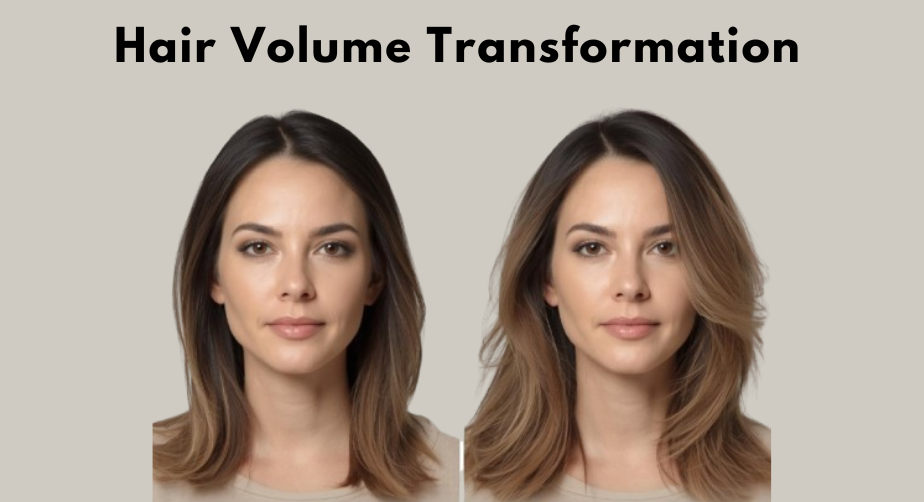
The term “hair system” may bring to mind bulky, fake-looking pieces, but that image is outdated. Modern hair solutions are realistic, lightweight, and natural-looking. If you’re comparing hair systems for women with other options like hairpieces for women or hair extensions for women, today’s choices are far more customizable than most people expect.
Today’s hair systems for women are designed to be undetectable, breathable, and comfortable. Many women choose custom hair systems because they can match specific density needs, scalp sensitivities, and daily routines. Thousands of women wear them confidently at work, the gym, and social events without anyone noticing.
This isn’t about the all-or-nothing approach of a full wig. For many women, the real need is targeted volume and coverage to conceal thinning at the crown, fill in a widening part, or restore the look of natural density. It’s also why search results for hair replacement women can feel overwhelming: the category includes everything from toppers and partial systems to full coverage options, and the right choice depends on where you’re thinning and how you want your hair to look and behave. Female hair loss itself can stem from hormonal changes, genetics, medical conditions, or stress, as outlined by the American Hair Loss Association.
This guide details what these solutions are, how they differ from old-fashioned wigs, and the realistic options available for restoring not just your hair, but your confidence.
The “In-Between” Solution: What Exactly is a Hair Topper?
For women whose hair loss doesn’t warrant a full wig but who need more coverage than clever styling can provide, the modern hair topper is the answer. Think of it as one of the most practical hairpieces for women: not a whole new head of hair, but a targeted solution—a small piece that clips discreetly onto the top of the head to add volume and conceal thinning. For many wearers, a topper functions as a streamlined hair systems for women focused on the exact area that needs help.
The key difference between a topper and a wig is blending. Unlike a wig, which covers your entire head, a topper is designed to work with your existing hair. It provides coverage on top while your own biological hair frames your face and flows from the sides and back. This seamless integration is what makes toppers look so incredibly natural, and it’s also why some women choose toppers instead of hair extensions for women—a topper can address visible scalp show-through in a way extensions typically can’t.
A topper is the ideal choice for women with early to moderate thinning concentrated at the part, crown, or across the top of the head. If you have enough hair on the sides and back to create a blend, but you struggle with scalp show-through or a lack of volume on top, a topper offers a confidence-boosting fix without the commitment of a full wig. In many “hair replacement women” consultations, this is the point where toppers become the most logical first step.
Topper vs. Full Wig: Which One Solves Your Specific Hair Loss Problem?
Deciding between a hair topper and a full wig becomes clear when you focus on the pattern of your hair loss. It’s not about which product is “better,” but which tool is designed for your situation. The right choice depends on how much coverage you need and where you need it—especially if you’re comparing hairpieces for women with a more comprehensive hair systems for women.
A Hair Topper is best for:
- Targeted thinning at the part or crown.
- Adding volume to the top of your head.
- Blending with your own biological hair.
- A lighter, more breathable feel.
A Full Wig is best for:
- Widespread or significant hair loss.
- A complete change in color, length, or style.
- When there isn’t enough hair to blend with a topper.
- Total coverage and a uniform look.
For a broader comparison of non-surgical hair solutions, explore our complete guide on Toupee vs Wig vs Hair System
Finding Your Fit: A Simple Guide to Measuring for a Topper Base
If a topper is your ideal solution, the first step is finding the right fit by measuring the area of thinning. Using a flexible tape measure, first measure from front to back, starting just behind your hairline and going over your crown to where the thinning stops. Next, measure side to side across the widest part of this area. These numbers are the foundation for choosing effective volumizers for thinning hair on top, whether you’re buying ready-to-wear hairpieces for women or ordering custom hair systems built to your exact dimensions.
Here is the most critical tip for a secure fit: add one full inch to both of your measurements. For example, if you measured 5” by 6”, your minimum base size is 6” by 7”. This extra inch provides a vital landing strip of healthy hair for the topper’s clips to grip. Attaching clips to fragile hair at the very edge of thinning is insecure and can cause more damage, so this buffer ensures your piece stays put with confidence.
This final measurement is your ‘base size.’ Knowing this number narrows your search to options that provide perfect coverage, allowing you to shop with confidence. Once you have your size, the next step is deciding on the base material.
The “Scalp” Illusion: Why Base Material Is Key to a Natural Look
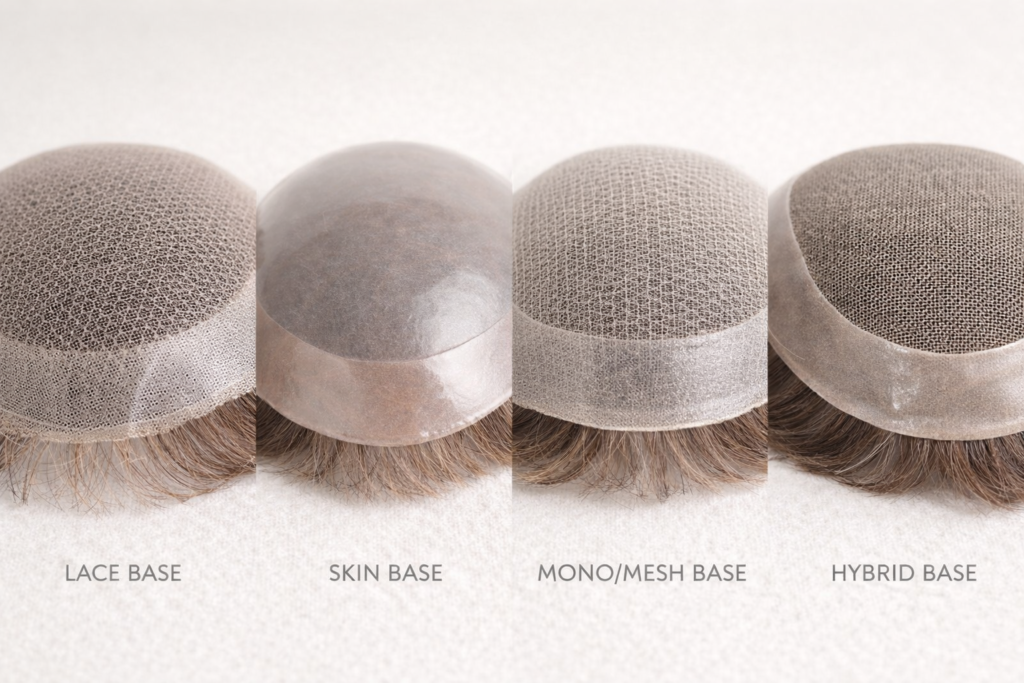
With your base size figured out, the next key decision is the base material—the fabric the hair is attached to. It’s designed to create a scalp illusion and is critical for a natural look. The two most common options, monofilament and lace front, each offer a unique benefit. Base design is also where custom hair systems can shine, because construction choices directly affect realism, comfort, and styling flexibility.
A monofilament base is like a secret scalp. This ultra-fine, flesh-toned mesh allows your own scalp color to show through, creating a remarkably realistic appearance. Each hair is individually tied to the base, which gives you the freedom to change your part from side to side or wear a center part, just as you would with your own hair. It’s also a very durable and comfortable option for everyday wear—especially if your goal is a truly wearable hair systems for women, not just a special-occasion piece.
If an undetectable hairline is your number one priority, especially for styles worn off the face, then a lace front base is your answer. It features a delicate, transparent lace panel at the front edge of the topper. The hairs are knotted into this lace, creating a transitional hairline that seems to melt right into your skin. This feature is the secret behind confident ponytails and swept-back styles, and it’s a common request in higher-end custom hair systems—but its delicate nature means it requires a gentler touch.
The best choice depends on your priority. For versatile parting, a monofilament base is perfect. For wearing hair pulled back confidently, a lace front is ideal. Some toppers even combine both.
Your Undetectable Secret: How to Blend a Topper with Your Natural Hair
Achieving a seamless blend is about technique, and the most important rule is correct placement. Always position the front edge of the topper about a half-inch to an inch behind your natural hairline, never directly on it. This simple step prevents a hard, visible line and gives you a small amount of your own hair to work with, which is the key to making the transition invisible. It’s one of the reasons hairpieces for women can look remarkably real when they’re applied with intention rather than rushed.
With the topper clipped in, you can use a professional trick for blending. Take a fine-tooth comb and gently pull small sections of your own biological hair from in front of the topper, drawing them up and over its front edge. This “pull-through” technique instantly softens the line where the topper begins, creating a flawless, natural-looking graduation—exactly what most women want from a hair systems for women that claims to be undetectable.
Finally, a perfect blend starts with color. A common mistake is to match a topper to the color of your roots. For the most natural look, you should match the topper’s color to the ends of your hair. Our hair is rarely one solid shade; it’s almost always lighter on the ends from sun and time. Matching to the ends ensures the piece integrates beautifully into this natural color gradient. If you currently wear hair extensions for women, this same “match the ends” logic applies—consistent tone through the mid-lengths and ends is what makes added hair disappear into your natural hair.
Protecting Your Investment: 3 Essential Rules for Hair System Care
Proper care is essential to maximize lifespan and keep everything looking beautiful. While not complicated, caring for a hair systems for women is different from caring for biological hair. Following a few key rules will protect the piece from damage and keep the hair soft and vibrant—whether you’re wearing one of the everyday hairpieces for women available online or investing in higher-end custom hair systems.
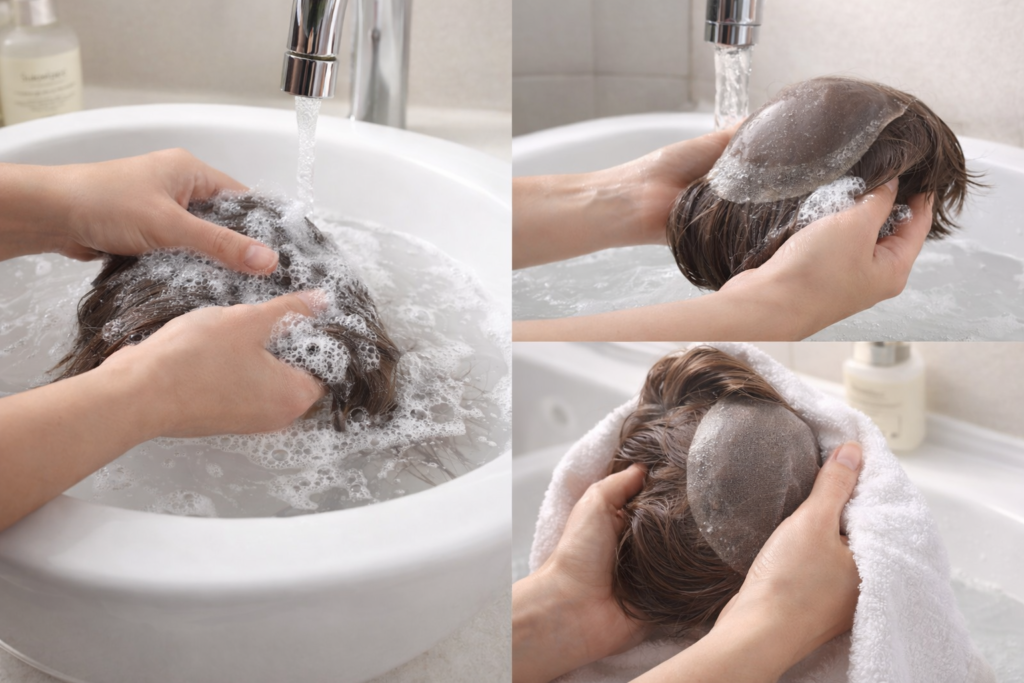
The most important rule is to always wash your hair system off your head. Washing it while attached can create tangles near the base and put stress on the clips or bonds. Removing it allows for a much gentler and more thorough cleaning that protects both the hair and the delicate base.
The washing process is simple:
- Fill a sink or basin with cool water and a small amount of sulfate-free shampoo. Sulfates can strip color and moisture from hair that doesn’t receive natural scalp oils.
- Gently dip and submerge the piece, squeezing the suds through the hair. Never rub, scrub, or twist the hair, as this can cause tangles and damage.
- Rinse thoroughly under cool, running water. After conditioning, gently pat it with a towel—don’t wring it out.
Unlike biological hair, a women’s human hair system for volume doesn’t need frequent washing. A good guideline is to wash it every 10 to 15 wears, or whenever it starts to feel stiff or dull from product buildup. After washing, place it on a wig stand or mannequin head to air dry. This helps the base keep its natural shape and prevents strain on the hair fibers. If you switch between hair extensions and a topper, treat both gently. Use moisture-focused products to prevent frizz and dryness. This keeps added hair from looking separate from your own.
Budgeting for Confidence: Decoding the Cost of Women’s Hair Systems
The cost of women’s hair replacement systems isn’t a single number but a range influenced by two key factors: the hair type and the base construction. The principles are similar to buying a coat—the price depends on the material quality and the labor involved. It’s also why the broad category of hair replacement women shop for spans everything from budget-friendly options to premium pieces.
Synthetic hair is more budget-friendly upfront, making it a great starting point. Human hair is a larger investment but offers unparalleled realism, styling versatility with heat tools, and a much longer lifespan. Similarly, the base construction affects the price. A machine-made base is less expensive, while a fully hand-tied monofilament or lace base costs more due to the intensive labor required. If you’re comparing these prices to hair extensions for women, remember the goal is different. Extensions add length or fullness. Custom hair systems focus on scalp coverage and realistic density where you’re thinning.
Your Action Plan: Taking the First Step Toward Fuller Hair Today
You now understand modern, undetectable hair solutions and available hair systems for women that fits your lifestyle. You can also select hairpieces for women designed for targeted thinning. Feeling in control starts with a single step. Here is a simple plan to transform your new knowledge into confident action:
Assess Your Needs:
Identify your primary goal. Is it adding volume, concealing a widening part, or covering thinning at the crown?
Take Your Measurements:
Use a flexible tape measure to determine the area you want to cover. This gives you a starting point for the base size you’ll need, and it also prepares you to evaluate custom hair systems if you want a more tailored fit.
Begin Your Research:
With your goal and measurements in hand, you can explore hair toppers from reputable online vendors or search for a local specialist in non-surgical options. As you research, keep in mind that hair replacement women get the best results when they prioritize fit, base realism, and blend not just a product photo.
This isn’t about hiding; it’s about discovering a tool that helps you feel like yourself again. Whether you start with everyday hairpieces for women or upgrade to a hair system, you can choose confidently. Custom hair systems offer a long-term solution. The result can look natural, wearable, and truly yours.