
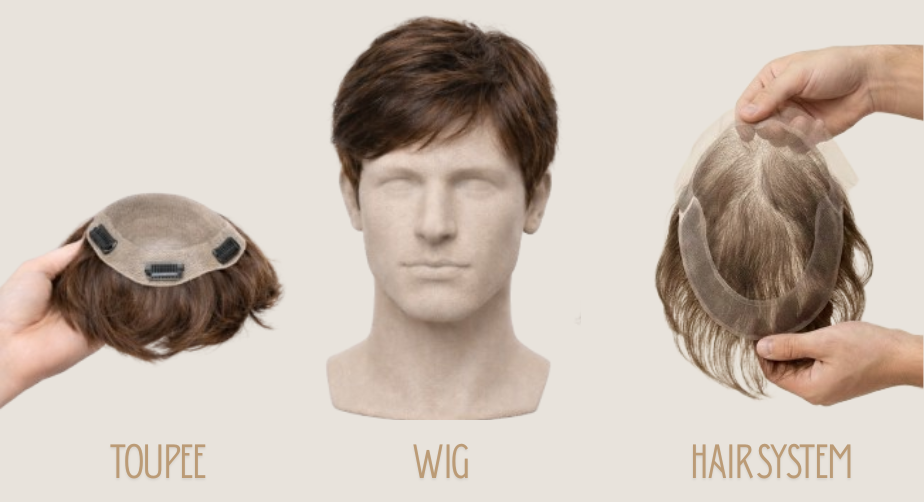
You can have the right base and ideal hair density, but without proper ventilation, a hair system will look stiff and unnatural. When comparing a toupee vs wig or even a hair system vs wig, it’s details like ventilation that truly separate modern, natural-looking hair loss solutions from more traditional pieces. Ventilation is the skilled process of attaching and angling each hair so it follows the natural direction and lift of real hair. This is what allows the hair to part easily, move with the wind, and fall back into place naturally.
On lace systems, each hair is secured with a microscopic knot. In the debate of hair system vs toupee, craftsmanship is often the defining factor. When knotting is done poorly, it can restrict movement and create visible dark specks known as the “grid effect.” This is one reason some older hair replacement options appear less realistic.
High-quality systems solve this with refined knotting and techniques like knot bleaching, allowing the hair to move freely and appear as if it’s growing directly from the scalp. Whether someone is weighing a toupee vs wig or exploring advanced hair loss solutions and other hair replacement options, understanding these hidden construction details is key to achieving natural movement and an undetectable finish.
The Toupee: A Clear Look at This Classic Hairpiece
Toupee covers a partial area of hair loss, such as a thinning crown or a receding hairline. This is where the toupee vs wig conversation becomes practical: you’re not choosing “better,” you’re choosing the coverage level that matches your hair loss pattern.
The main reason someone would choose a toupee is to address pattern baldness. This is the common type of hair loss where hair on the sides and back of the head remains healthy, while the top begins to thin. A toupee is custom-made to match the color and texture of that existing hair, creating the appearance of a full, even head of hair one of the simplest hair loss solutions for targeted thinning.
Admittedly, the word “toupee” might bring to mind an obvious, ill-fitting hairpiece from decades ago. In fact, many people exploring hair system vs toupee are really comparing “traditional hairpiece” versus “modern, integrated version.” The outdated toupee has evolved into something far more advanced and realistic, leading to a new category of undetectable hairpieces that have shed the old stigma.
What Is a Wig? Understanding Full-Coverage Hair Replacement
A wig is a full-head hair covering designed to conceal complete or significant hair loss. Unlike partial systems, wigs do not blend with your existing hair they replace it entirely. This makes them one of the most versatile hair replacement options, available in synthetic or human hair, with styles ranging from everyday looks to dramatic fashion changes. For individuals experiencing total hair loss due to medical conditions or those who simply want the flexibility to switch hairstyles instantly, wigs offer a convenient and non-committal solution.
However, when comparing a toupee vs wig or even a hair system vs wig, the key difference lies in wearability and realism. Most wigs are designed for daily removal and use clips, combs, adjustable straps, or bands for security. While high-quality wigs can look very natural, they do not typically support 24/7 wear like some advanced hair loss solutions. For those seeking a removable, flexible option that covers the entire scalp, a wig remains a practical and widely used choice.
What is a Hair System? The Undetectable, High-Tech Solution
This high-tech evolution of the toupee is what’s known today as a hair system. Think of it less as a “piece” and more as an integrated solution a thin, flexible layer of hair that becomes a temporary part of you. When people compare hair system vs wig, a hair system blends seamlessly and stays in place instead of coming off every night.
The magic behind this realism lies in the base, the foundation the hair is attached to. Unlike the thick, heavy bases of old toupees, modern systems use materials that are practically invisible against the skin, like delicate lace or an ultra-thin, skin-like layer. When professionally fitted, the hairline vanishes, creating the illusion that hairs are growing directly from your scalp. This advanced construction is also why hair system vs toupee can feel like comparing two different eras of hair replacement technology.
Perhaps the biggest lifestyle difference with a hair system is how it’s worn. Instead of removing it daily like traditional options, most systems are semi-permanent and secured with a skin-safe adhesive for weeks at a time. If you’d like to understand the basics first, read our guide on What is a Hair System? Everything you need to know
Daily Clips vs. Semi-Permanent Bonds: How Do They Stay On?
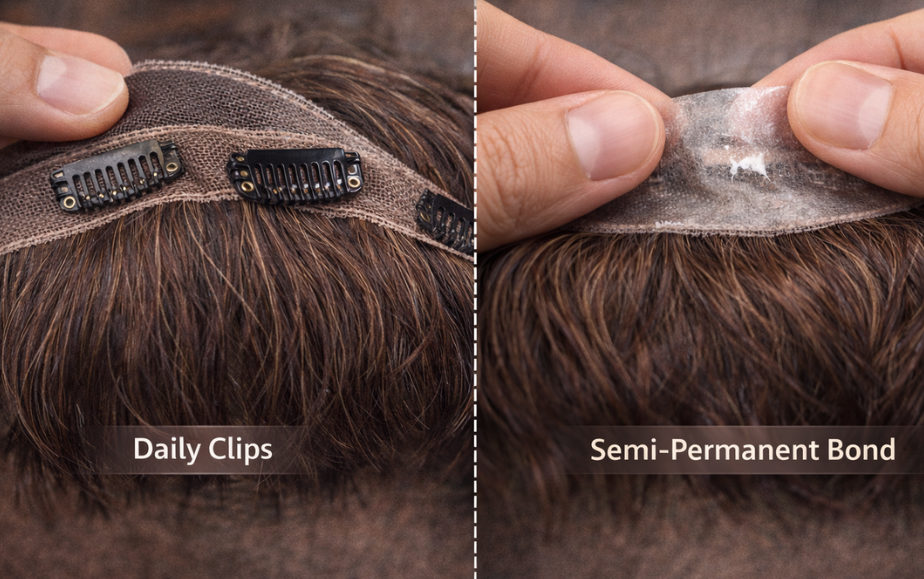
The way a hairpiece attaches is one of the biggest factors in how it fits into your daily life—and it’s a key part of deciding toupee vs wig. A wig, designed for flexibility and temporary wear, typically uses simple, built-in methods. Think of small clips that snap onto your existing hair, hidden combs that grip securely, or an adjustable elastic band, much like the one inside a fitted cap. These toupee attachment methods make it easy to put on in the morning and take off at night.
In contrast, modern hair systems support continuous wear and require a more secure attachment method. This defines the hair system vs wig difference: instead of clips, you secure a hair system with medical-grade adhesive or double-sided tape. A professional applies the bond to your scalp, creating a secure hold that lasts for weeks. This lets you swim, sleep, and exercise confidently without worrying about movement.
Human Hair vs. Synthetic Hair: What’s the Real Difference in Look and Feel?
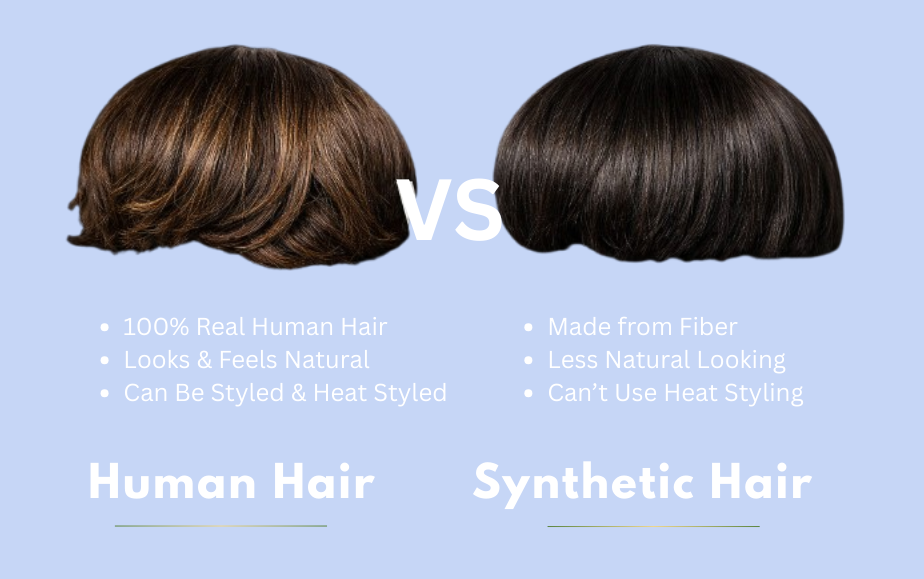
When it comes to hair replacement options, you have two main choices, and each offers a distinct set of trade-offs. A piece made from human hair provides the most natural look and feel because, simply, it is real hair. You can dye it, cut it, and style it with heat tools just like you would your own. This versatility comes at a price, however, as human hair is more expensive and requires regular styling after each wash to look its best.
On the other hand, modern synthetic hair offers incredible convenience and is more budget-friendly. Its greatest advantage is something called style memory. Think of it as a “pre-set” look; even after you wash it, the hair will dry and fall back into its original style with almost no effort. The major limitation is that most synthetic fibers can’t handle heat, meaning you can’t use a curling iron or flat iron on them. This makes them a great low-maintenance option for someone who is happy with one consistent look. Ultimately, choosing the right hairpiece means weighing what matters most to you.
Your Quick-Compare Cheat Sheet: Toupee vs Wig vs Hair System
Choosing the right hairpiece comes down to a few key questions about your lifestyle and goals. This quick-compare cheat sheet breaks down the main differences at a glance.
| Feature | Toupee | Wig | Modern Hair System |
|---|---|---|---|
| Coverage | Partial (covers a specific spot, like the crown) | Full Head | Partial (custom-fitted to your unique hair loss pattern) |
| Attachment | Daily Wear (often with clips or double-sided tape) | Daily Wear (removable with clips or bands) | Semi-Permanent (bonded for weeks at a time) |
| Lifestyle | Removable daily. Not ideal for intense activity | Flexible, but not for 24/7 wear like sleeping or showering | Wearable 24/7 through sleep, showers, and exercise |
| Realism | Tends to be less realistic; can have a noticeable base or hairline | Varies widely, from costume-quality to very natural | High; designed to be undetectable with an invisible hairline |
| Best For | A simple, non-permanent solution for a specific bald patch | Total hair loss, temporary use, or the desire to change your look completely | Seamlessly integrating with your existing hair for an active, confident lifestyle |
Choosing the Right Hair Replacement Solution
Now that the terms “wig,” “toupee,” and “hair system” are clear, you can confidently evaluate which path aligns with your needs. The choice is a personal one, and it starts with a few key questions:
- Do I need full coverage for widespread hair loss, or partial coverage for a specific area?
- Does my lifestyle suit a daily-wear option I can remove at night, or becomes a part of me 24/7?
- Is my priority styling versatility and ultimate realism (human hair), or affordability and low-maintenance convenience (synthetic hair)?
Answering these questions will guide you toward the right solution. If you’re narrowing down toupee vs wig, focus first on coverage and how often you want to remove your hair. If the decision is really hair system vs wig, think about whether you want daily flexibility or a more seamless. And if you’re stuck on hair system vs toupee, you are comparing removable patch with a newer, more integrated approach.
Whichever direction you choose, you can access more hair replacement options than ever, and many can become truly life-changing hair loss solutions when you match them to the right lifestyle. Since hair loss can stem from various causes, the American Academy of Dermatology outlines common reasons for hair loss that may help you better understand your situation before choosing a solution. Whether you explore natural-looking men’s wigs, research the cost of a custom hair system, or compare your options to a hair transplant, you can now make an informed decision.